

Unlocking the Potential of Retatrutide: A Novel Approach to Metabolic Health

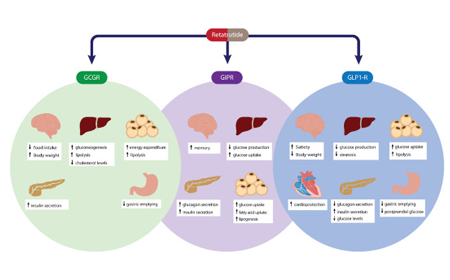
Retatrutide is a synthetic peptide that has attracted considerable interest in the scientific community due to its potential benefits for metabolic health. As a glucagon-like peptide-1 (GLP-1) receptor agonist, Retatrutide works by mimicking the action of the body’s natural GLP-1 hormones, which play a crucial role in glucose regulation and weight control.
*What distinguishes retatrutide from other GLP-1 receptor agonists?*
Although retatrutide shares some similarities with other GLP-1 receptor agonists, such as semaglutide, it has distinctive characteristics that set it apart. Some of the key differences are:
1. *Dual-action mechanism*: Retatrutide’s unique mechanism of action may provide additional benefits beyond traditional GLP-1 receptor agonists.
2. Pharmacological profile: Retatrutide’s pharmacological profile may offer advantages in terms of dosing, efficacy, or safety compared to other GLP-1 receptor agonists.
*Potential benefits of Retatrutide*
Research has highlighted several potential benefits of Retatrutide, including:
1. *Improved glucose regulation*: Retatrutide can help regulate blood sugar levels and improve insulin sensitivity.
2. *Weight control*: Retatrutide may assist with weight loss and weight maintenance, which could improve overall health outcomes.
3. *Metabolic health*: The effects of retatrutide on metabolic parameters may provide benefits to people with metabolic disorders.
*Applications in research*
Retatrutide is being studied in various research settings, including:
1. *Type 2 diabetes research*: Investigation of the potential benefits of retatrutide for glucose regulation and insulin sensitivity.
2. *Obesity research*: Examination of the effects of retatrutide on weight control and metabolic health.
3. *Research on metabolic disorders*: exploration of the potential therapeutic applications of retatrutide for various metabolic conditions.
*Conclusion*
Retatrutide is a promising peptide that offers a novel approach to metabolic health. Its unique mechanism of action and potential benefits make it an exciting area of research for scientists and researchers. As with any research peptide, it is essential to follow proper handling and safety protocols to ensure the integrity of the research.